On this day 250 years ago in Richmond, the Second Virginia Convention adjourns, but as one of its final acts it elects Thomas Jefferson as an alternate delegate to replace Peyton Randolph if he was unable to attend the Second Continental Congress in Philadelphia. Randolph had needed to resign from the First Continental Congress due to illness and if the Virginia House of Burgesses was called into session, Randolph intended to return to Williamsburg to preside as Speaker of the Virginia House. So the delegates to the Virginia Convention expected Jefferson to serve in the Continental Congress at some point, and as we know well today, he did.
Also on this day 250 years ago in Boston, a Loyalist minister writes to the Bishop of London that “it is hardly conceivable what a spirit of phrenzy reigns [in Massachusetts.] England must either resign the Govmt of the Colonies or subdue them.”
On this day 250 years ago an anonymous writer in Northampton County, Virginia wrote a letter complaining of harassment by “Captain Collins” (actually Lieutenant Henry Collins) of the 6-gun schooner HMS Magdalen that was published in the next edition of the Virginia Gazette. Four days earlier Collins had searched a sloop at Hungars Harbour in Northampton County of Eastern Shore Virginia looking for contraband. The next day he ordered his crew to board the sloop again and seized a young apprentice of the sloop’s owner and held him captive for three days to interrogate the apprentice in an unsuccessful effort to find evidence of smuggling.
A month later Collins and the crew of the schooner Magdalen would seize gunpowder in Williamsburg, starting the armed conflict between the Crown and the Patriots in Virginia.
Source: “The Virginia Gazette. Williamsburg: Printed by John Pinkney for the benefit of Clementina Rind’s children. March 30, 1775” accessed at http://hdl.loc.gov/loc.rbc/rbpe.1750130e
In the early morning hours before daylight on this day 250 years ago on Silver Creek in Kentucky, a party of Native Americans attack the encampment of Daniel Boone’s trailblazing party while they were constructing the Boone Trace. Captain William Twitty (sometimes spelled Twetty) was mortally wounded, and his slave, Sam, was killed instantly. Felix Walker was severely wounded but eventually survived. The Native Americans captured a couple of horses and then disappeared into the night.
Boone and other members of the party were not injured in the assault but the injuries to Twitty and Walker were so severe that they could not be moved safely. Boone’s company built a log shelter as a protective defensive position for the entire party while Twitty and Walker recovered. Within a few days Twitty died and was buried with Sam at the site. The wooden structure became known as “Twitty’s Fort” or “The Little Fort” and was occupied for many years afterwards as the first white settlement in Kentucky.
And on this day 250 years ago in Richmond, the Virginia Convention resolved to close the official courts authorized by the British government and that
the lawyers, suitors, and witnesses, ought not to attend the prosecution or defence of civil suits at the next General Court; and it is recommended to the several courts of justice not to proceed to the hearing or determination of suits on their dockets . . . . And during this suspention of the administration of justice, it is earnestly recommended to the people to observe a peaceable and orderly behaviour, to all creditors to be as indulgent to their debtors as may be, and to all debtors to pay as far as they are able; and where differences may arise which cannot be adjusted between the parties, that they refer the decision thereof to judicious neighbours, and abide by their determination.
The Virginia Convention also adopted a resolution organizing the Militia drafted by a committee that included Thomas Jefferson and George Washington:
that it be recommended to the inhabitants of the several counties of this colony that they form one or more Voluntier companies of infantry and troops of horse in each county and be in constant training and readiness to act on any emergency.
. . .
That each company of infantry consist of sixty eight rank and file to be commanded by one captain, two lieutenants, one ensign, four serjeants, four corporals and that they have a drummer and be furnished with a drum and colors: that every man be provided with a good Rifle if to be had, or otherwise with a common firelock, bayonet and cartouch box; and also with a tomahawk, one pound of gunpowder, and four pounds of ball at least fitted to the bore of his gun; that he be cloathed in a hunting shirt by way of uniform; and that all endeavor as soon as possible to become acquainted with the military exercise for infantry appointed to be used by his majesty in the year 1764.
That each troop of horse consist of thirty exclusive of officers: that every horseman be provided with a good horse, bridle, saddle with pistols and Holsters, a carbine or other short firelock with a bucket, a cutting Sword or tomahawk, one pound of gunpowder and four pound of ball at the least, and use the utmost diligence in training and accustoming his horse to stand the discharge of firearms, and in making himself acquainted with the military exercise for Cavalry.
That in order to make a further and more ample provision of ammunition it be recommended to the Committees of the several counties that they collect from their constituents in such manner as shall be most agreeable to them, so much money as will be sufficient to purchase half a pound of gun-powder, one pound of lead, necessary flints and cartridge paper for every titheable person in their county, that they immediately take effectual measures for the procuring such gunpowder, lead, flints and cartridge paper, and dispose thereof when procured in such place or places of safety as they may think best. And it is earnestly recommended to each individual to pay such proportion of the money necessary for these purposes as by the respective committees shall be judged requisite.
And on this day in New York City, in contrast to the preparations for War by the Virginia Convention, the General Assembly of the Colony of New York adopted a “humble petition” that asked the King to hear their “Prayer of your faithful Subjects, and while we are pleading our own Cause, and the Course of Liberty and Humanity, deign to consider us as Advocates for our Sister Colonies also.” The petition then politely asked the King to repeal each of the Intolerable Acts.
On this day 250 years ago at the Second Virginia Convention in Richmond, the Committee formed by Patrick Henry’s resolutions on the previous day presents its recommendations to the Convention for the formation of the Virginia militia. Patrick Henry is chairman of the Committee and the other members are Richard Henry Lee, Thomas Jefferson, Andrew Lewis, William Christian, Adam Stephen, George Washington, Isaac Zane, Jr., Robert Carter Nicholas, Lemuel Riddick, Edmund Pendleton, and Benjamin Harrison.
All of these delegates except Zane and Riddick served in prominent roles in the Revolution and have already been mentioned in this blog and will be mentioned again. Lemuel Riddick of Suffolk had represented Nansemond County in the House of Burgesses for thirty-nine years and was Clerk of the Nansemond County Court, but died in December1775. Isaac Zane represented Frederick County in the Virginia Conventions and Virginia Assembly throughout the Revolution, but his most important contribution to American Independence was his ownership and management of the Marlboro Iron Works, one of the largest suppliers of ordnance — producing six- and four-pound cannon, shot, swivel balls, chain shot, kettles, salt pans, and stoves — for the Virginia Militia and Continental Army.
On this day 250 years ago in Concord, the Massachusetts Provincial Congress resolves that
measures . . . for the purpose of putting this colony into a complete state of defense, be still most vigorously pursued by the several towns, as well as individual inhabitants, and that any relaxation would be attended with the utmost danger to the liberties of this colony and of all America
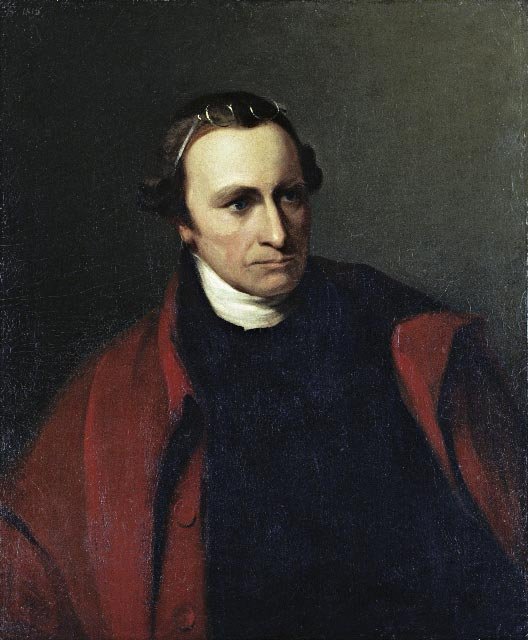
On this day 250 years ago at the Second Virginia Convention in Richmond, Patrick Henry introduced three resolutions modeled after the Fairfax Committee’s resolution to form an independent company of militia.
The first resolution stated:
that a well regulated Militia composed of Gentlemen and Yeomen is the natural Strength and only Security of a free Government: that such a Militia in this Colony would forever render it unnecessary for the Mother Country to keep among us for the purpose of our Defense any standing Army of mercenary Forces, always subversive of the Quiet, and dangerous to the Liberties of the People; and would obviate the Pretext of taxing us for their Support.
His second stated:
that the Establishment of such a Militia is at this Time peculiarly necessary by the State of our Laws for the protection and Defence of the Country, some of which are already expired and others will shortly do so; and that the known Remissness of Government in calling us together in a Legislative Capacity renders it too insecure in this time of Danger and Distress to rely; that Opportunity will be given of renewing them in General Assembly, or making any provision to secure our inestimable Rights & Liberties from those further Violations with which they are threatened.
The third resolution stated:
Resolved therefore that his Colony be immediately put into a posture of Defence [and that a Committee be appointed] to prepare a Plan for embodying, arming, and disciplining such a Number of Men as may be sufficient for that purpose.
Richard Henry Lee seconded Henry’s resolutions. Several delegates to the Convention rose to speak against Henry’s third resolution arguing that it was a “prophesy of war” and “would place Virginia in the false position of appearing not to resist armed conflict but to invite it.” In response to these arguments Patrick Henry delivered his most famous speech, which was recorded years later as follows:
No man thinks more highly than I do of the patriotism, as well as abilities, of the very worthy gentlemen who have just addressed the House. But different men often see the same subject in different lights; and, therefore, I hope it will not be thought disrespectful to those gentlemen if, entertaining as I do, opinions of a character very opposite to theirs, I shall speak forth my sentiments freely, and without reserve. This is no time for ceremony. The question before the House is one of awful moment to this country. For my own part, I consider it as nothing less than a question of freedom or slavery; and in proportion to the magnitude of the subject ought to be the freedom of the debate. It is only in this way that we can hope to arrive at truth, and fulfil the great responsibility which we hold to God and our country. Should I keep back my opinions at such a time, through fear of giving offence, I should consider myself as guilty of treason towards my country, and of an act of disloyalty toward the majesty of heaven, which I revere above all earthly kings.
Mr. President, it is natural to man to indulge in the illusions of hope. We are apt to shut our eyes against a painful truth, and listen to the song of that siren till she transforms us into beasts. Is this the part of wise men, engaged in a great and arduous struggle for liberty? Are we disposed to be of the number of those who, having eyes, see not, and, having ears, hear not, the things which so nearly concern their temporal salvation? For my part, whatever anguish of spirit it may cost, I am willing to know the whole truth; to know the worst, and to provide for it.
I have but one lamp by which my feet are guided; and that is the lamp of experience. I know of no way of judging of the future but by the past. And judging by the past, I wish to know what there has been in the conduct of the British ministry for the last ten years, to justify those hopes with which gentlemen have been pleased to solace themselves, and the House? Is it that insidious smile with which our petition has been lately received? Trust it not, sir; it will prove a snare to your feet. Suffer not yourselves to be betrayed with a kiss. Ask yourselves how this gracious reception of our petition comports with these war-like preparations which cover our waters and darken our land. Are fleets and armies necessary to a work of love and reconciliation? Have we shown ourselves so unwilling to be reconciled, that force must be called in to win back our love? Let us not deceive ourselves, sir. These are the implements of war and subjugation; the last arguments to which kings resort. I ask, gentlemen, sir, what means this martial array, if its purpose be not to force us to submission? Can gentlemen assign any other possible motive for it? Has Great Britain any enemy, in this quarter of the world, to call for all this accumulation of navies and armies? No, sir, she has none. They are meant for us; they can be meant for no other. They are sent over to bind and rivet upon us those chains which the British ministry have been so long forging. And what have we to oppose to them? Shall we try argument? Sir, we have been trying that for the last ten years. Have we anything new to offer upon the subject? Nothing. We have held the subject up in every light of which it is capable; but it has been all in vain. Shall we resort to entreaty and humble supplication? What terms shall we find which have not been already exhausted? Let us not, I beseech you, sir, deceive ourselves. Sir, we have done everything that could be done, to avert the storm which is now coming on. We have petitioned; we have remonstrated; we have supplicated; we have prostrated ourselves before the throne, and have implored its interposition to arrest the tyrannical hands of the ministry and Parliament. Our petitions have been slighted; our remonstrances have produced additional violence and insult; our supplications have been disregarded; and we have been spurned, with contempt, from the foot of the throne. In vain, after these things, may we indulge the fond hope of peace and reconciliation. There is no longer any room for hope. If we wish to be free² if we mean to preserve inviolate those inestimable privileges for which we have been so long contending if we mean not basely to abandon the noble struggle in which we have been so long engaged, and which we have pledged ourselves never to abandon until the glorious object of our contest shall be obtained, we must fight! I repeat it, sir, we must fight! An appeal to arms and to the God of Hosts is all that is left us!
They tell us, sir, that we are weak; unable to cope with so formidable an adversary. But when shall we be stronger? Will it be the next week, or the next year? Will it be when we are totally disarmed, and when a British guard shall be stationed in every house? Shall we gather strength by irresolution and inaction? Shall we acquire the means of effectual resistance, by lying supinely on our backs, and hugging the delusive phantom of hope, until our enemies shall have bound us hand and foot? Sir, we are not weak if we make a proper use of those means which the God of nature hath placed in our power. Three millions of people, armed in the holy cause of liberty, and in such a country as that which we possess, are invincible by any force which our enemy can send against us. Besides, sir, we shall not fight our battles alone. There is a just God who presides over the destinies of nations; and who will raise up friends to fight our battles for us. The battle, sir, is not to the strong alone; it is to the vigilant, the active, the brave. Besides, sir, we have no election. If we were base enough to desire it, it is now too late to retire from the contest. There is no retreat but in submission and slavery! Our chains are forged! Their clanking may be heard on the plains of Boston! The war is inevitable and let it come! I repeat it, sir, let it come.
It is in vain, sir, to extenuate the matter. Gentlemen may cry, Peace, Peace but there is no peace. The war is actually begun! The next gale that sweeps from the north will bring to our ears the clash of resounding arms! Our brethren are already in the field! Why stand we here idle? What is it that gentlemen wish? What would they have? Is life so dear, or peace so sweet, as to be purchased at the price of chains and slavery? Forbid it, Almighty God! I know not what course others may take; but as for me, give me liberty or give me death!
Following Patrick Henry’s speech, the Virginia Convention voted 65 to 60 to adopt Henry’s resolutions forming a militia in Virginia independent of Royal authority.
Today, March 23, 2025, VA250 will have a live reenactment of Patrick Henry’s speech at St. John’s Church in Richmond that will be livestreamed here https://va250.org/patrick-henrys-speech/
On this day 250 years ago in Harford County, Maryland, 34 men sign the Bush Declaration:
We, the Committee of Harford County, having most Seriously and maturely Considered the Resolves and Association of the Continental Congress, and the Resolves of the Provincial Convention, do most heartily approve of the same, and as we Esteem ourselves in a more particular manner intrusted by our Constituents to see them carried into Execution, we do most solemnly pledge ourselves to each other, and to our country, and engage ourselves by every tie held sacred among mankind, to perform the same at the risque of our lives and fortunes.
Today, March 22, 2025, at 9:30 am at Bel Air, Maryland, the people of Harford County will commemorate these brave men who risqued their lives and fortunes for American rights.
On this day 250 years ago in Concord, Massachusetts, the Massachusetts Provincial Congress reconvened and would remain in session for almost a month, adjourning on April 15, 1775, only four days before the War would begin at Concord.
On this day 250 years ago in Williamsburg, Virginia, Royal Governor Lord Dunmore issues a proclamation outlawing Richard Henderson and the Transylvania Company for their unauthorized purchase of land from the Cherokees:
And whereas advice has been received, that one Richard Henderson, and other disorderly persons, his associates, under pretence of a purchase made from the Indians, contrary to the aforesaid orders and regulations of his Majesty, do set up a claim to the lands of the Crown in the limits of this Colony; I have thought fit, therefore, to issue this my proclamation, strictly charging all justices of the peace, sheriffs, and other officers, civil and military, to use their utmost endeavours to prevent the unwarrantable and illegal designs of the said Henderson and his abettors; and if the said Henderson or others concerned with him, shall take possession of, or occupy and lands in the limits of his Majesty’s government of Virginia, merely under any purchase, or pretended purchase, made from the Indians, without any other title, that he or they may be required, in his Majesty’s name, forthwith to depart, and relinquish the possessions so unjustly obtained; and in case of refusal and of violent detaining of such possession, that he or they may be immediately fined & imprisoned in the manner the laws in such cases direct
On this day 250 years ago in Boston, Samuel Adams wrote to John Augustine Washington to thank him “for one thousand and ninety two bushels of grain , being a generous donation sent by the inhabitants of Westmoreland County , in Virginia, to the sufferers in this Town by the Boston Port Bill.” Washington was the younger brother of George Washington, but was also Chairman of the Westmoreland County Committee and would serve in the War as Westmoreland County’s representative in the Virginia House of Delegates and as colonel of the County’s militia.
Also on that day in Portsmouth, England, Benjamin Franklin boards a ship to return to America. He had spent over ten years in England representing the Colonies and unsuccessfully trying to reconcile the British government to America. He would never return.
On this day 250 years ago at the Parish Church of Henrico County (now St. John’s Episcopal Church) in Richmond the Second Virginia Convention convenes. 95 delegates are present on the first day and over the next week a total of 120 delegates would participate in the convention including Peyton Randolph, Patrick Henry, George Washington, George Wythe, Benjamin Harrison, Edmund Pendleton, Robert Carter Nicholas, Carter Braxton, George Mason, Richard Henry Lee, Thomas Nelson, Jr., Richard Bland, Adam Stephen, Andrew Lewis, William Christian, Thomas Jefferson, and other men whose contributions to American Independence are less well known to history. On this first day, the delegates name Peyton Randolph as President and John Tazewell as Clerk of the Convention and ask Rev. Miles Cary Selden of the Parish Church to say prayers each morning. Miles was a member of the Henrico Committee of Safety and would be later known as the “Patriot Parson.” Tazewell was a member of the Williamsburg Committee and would continue to serve as Clerk of each succeeding Virginia Convention and then of the House of Delegates that replaced the Conventions before his appointment as a judge. Tazewell would die serving as a judge before the end of the War.
On this day 250 years ago in Boston, a “Letter from Boston to Newport, Rhode-Island” reported that British soldiers guarding Boston Neck attacked and “barbarously cut and mangled” men who were carting supplies out of town.
On this day 250 years ago in London, Benjamin Franklin wrote too Arthur Lee:
I leave Directions with Mrs. Stevenson to deliver you all the Massachusetts Papers, when you please to call for them. I am sorry that the Hurry of Preparing for my Voyage and the many Hindrances I have met with, prevented my meeting you and Mr. Bollan, and conversing a little more on our Affairs before my Departure. I wish to both of you Health and Happiness, and shall be glad to hear from you by every Opportunity: I shall let you know how I find things in America. I may possibly return again in Autumn, but you will if you think fit continue henceforth the Agent for the Assembly of the Massachusetts, which I cannot again undertake.
Source: “From Benjamin Franklin to Arthur Lee, 19 March 1775,” Founders Online, National Archives, https://founders.archives.gov/documents/Franklin/01-21-02-0301. [Original source: The Papers of Benjamin Franklin, vol. 21, January 1, 1774, through March 22, 1775, ed. William B. Willcox. New Haven and London: Yale University Press, 1978, pp. 534–535.]
On this day 250 years ago in Boston, John Andrews wrote to his brother-in-law in Philadelphia reports of British soldiers harassing citizens of Boston:
An officer, with men from the 4th Regiment in Barracks at West Boston, erected a couple of tents just at the back of Howard’s meeting and conducted a parcell of fifes and drums there, which play’d and beat Yanky Doodle the whole forenoon service time, to the great interruption of the congregation. They intended to repeat the same in the afternoon, but were prevented by orders from the General. The officers in general behave more like a parcell of children, of late, than men. Captain [*] of the Royal Irish first expos’d himself by behaving in a very scandalous manner at the South meeting, while Doctor Warren was delivering the oration in commemoration of the Massacre. He got pretty decently frighted for it. A woman, among the rest, attack’d him and threatened to wring his nose. Last Wensday, the day the oration was publish’d, a vast number of Officers assembled in King street, when they proceeded to the choice of a moderator and seven out of their number to represent the select men, the latter of whom with the moderator went into the Coffee house balcony, where was provided a fellow apparrell’d in a black gown with a rusty grey wigg and fox tail hanging to it, together with bands on — who deliver’d an oration from the balcony to a crowd of few else beside gaping officers. It contain’d the most scurrilous abuse upon the characters of the principal patriots here, wholly made up of the most vile, profane, blackguard language as ever was express’d. . . .
The same evening eight or nine officers paraded the street and abus’d every person they met. but finally met with their matches and were all made to lay level with the ground — and yesterday four Sergeants and as many men were sent to insult John Hancock, under pretence of seeing if his stables would do for barracks.
I wish Andrews had written more details about the patriotic woman of Boston who attacked the Captain of the Royal Irish Regiment “and threatened to wring his nose.” But he did include an interesting report on the collection of arms by the Massachusetts Provincial Congress and an attempt to smuggle ammunition out of Boston to the Patriots.
Our provincial congress is to meet next month at Concord, when, I am told, there is to he an army of observation incamp’d, consisting of twenty thousand men. Am also inform’d that the congress have expended near a million in our Old tenor for amunition and provisions. This I know, that they have had upwards of fifty ton of shot, shell, &ca., cast, besides an innumerable number of Musket halls. Have seen twenty load cover’d with dung to go out of town myself, but lately all carts have been search’d by the Guards, and unluckily last Saturday evening a load of cartridges were seiz’d pack’d in candle boxes, consisting of 13500 besides 1 boxes balls. The countryman struggled hard before he would deliver ’em, and received two or three bad wounds.
On that same day, British Lieutenant Frederick Mackenzie recorded in his diary a slightly different report of the same or perhaps a different attempt by a “countryman” to smuggle ammunition out of Boston:
A Country man was Stopped at the Lines, going out of town with 19,000 ball Cartridges, which were taken from him. When liberated, he had the insolence to go to Head quarters to demand the redelivery of them. When asked who they were for, he said they were for his own use; and on being refused them, he said he could not help it, but they were the last parcel of a large quantity which he had carried out at different times. Great numbers of Arms have been carried out of town during the Winter; and if more strict search had been made at the Lines, many of them, and much Ammunition might have been seized.
And on this day 250 years ago in Newport, Rhode Island, Rev. Ezra Stiles recorded in his diary:
A vessel this day from Virginia informs that the Virginians had sent a Vessel to Old France which lately returned Laden with Powder, Arms, Field pieces & military stores— & tho’ pursued & fired at by the Man o’ War & her Cutters, got in safe to Land.
 On This Day In The Revolution